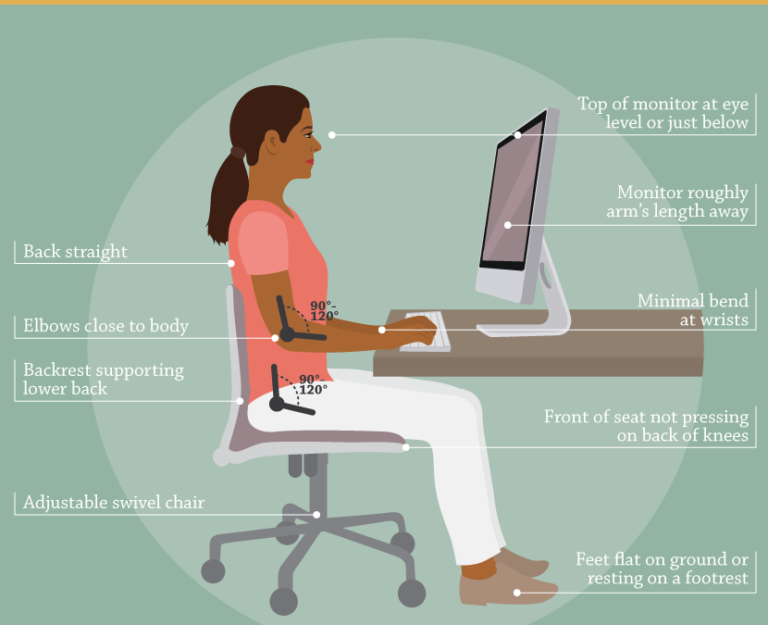
How to sit properly on a chair: feet flat, back supported, hips and knees at about 90 degrees.
I’ve spent years studying posture and helping people fix daily pain with simple habits. This article explains exactly how to sit properly on a chair, step by step, with clear tips you can use today to reduce pain, improve focus, and protect your spine.
Why proper sitting matters
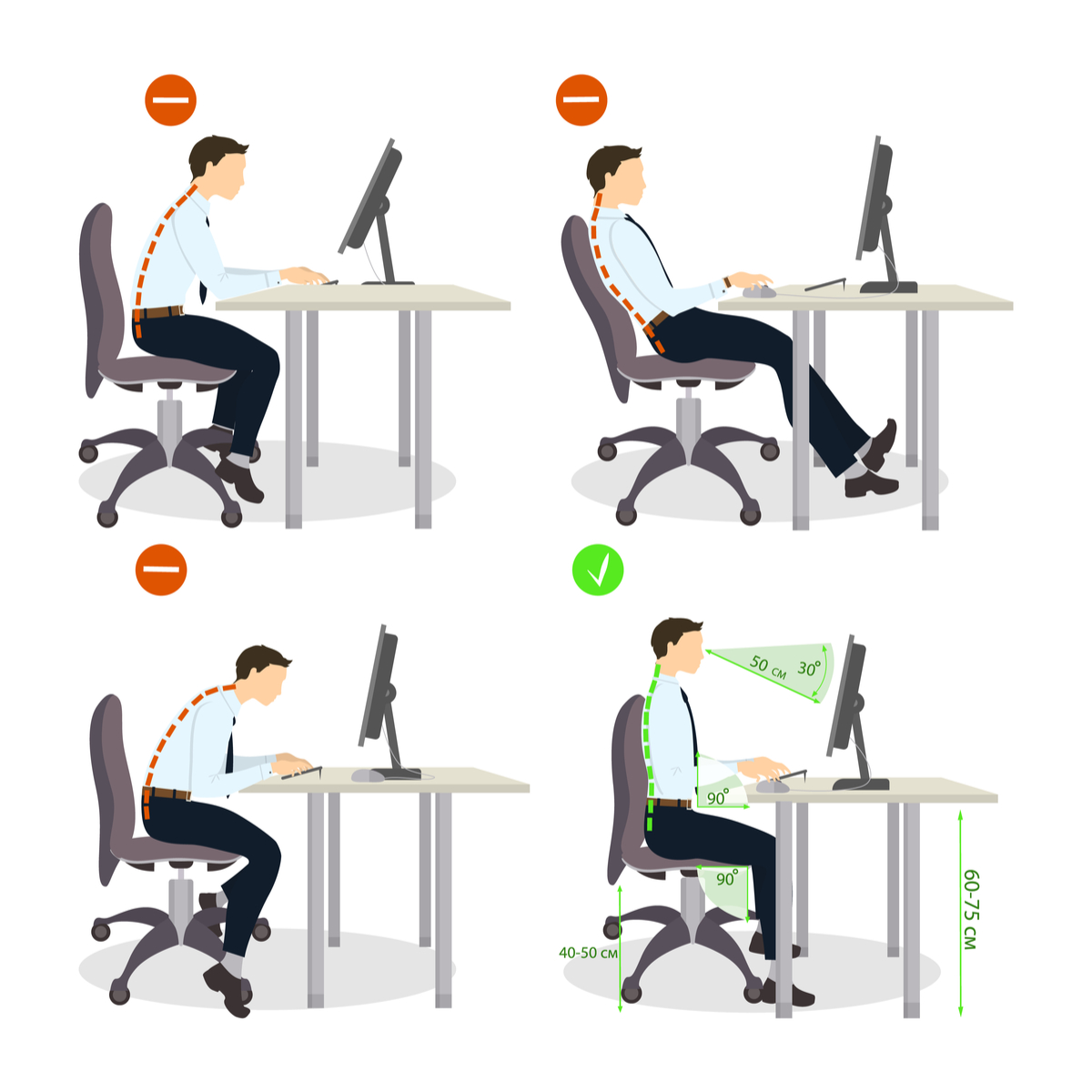
Sitting well protects your spine. Good posture spreads load across strong parts of your body. Learning how to sit properly on a chair lowers back pain and reduces neck strain. It also helps you stay more alert and productive during work or study.

Basic anatomy and definitions
Your pelvis, lumbar spine, thoracic spine, and shoulders form the core of seated posture. Neutral spine means a gentle S-shaped curve with natural lumbar support. When you learn how to sit properly on a chair you respect these curves and avoid positions that force muscles to work too hard. Poor sitting often causes tight hips, weak core muscles, and sore shoulders.
Step-by-step: how to sit properly on a chair
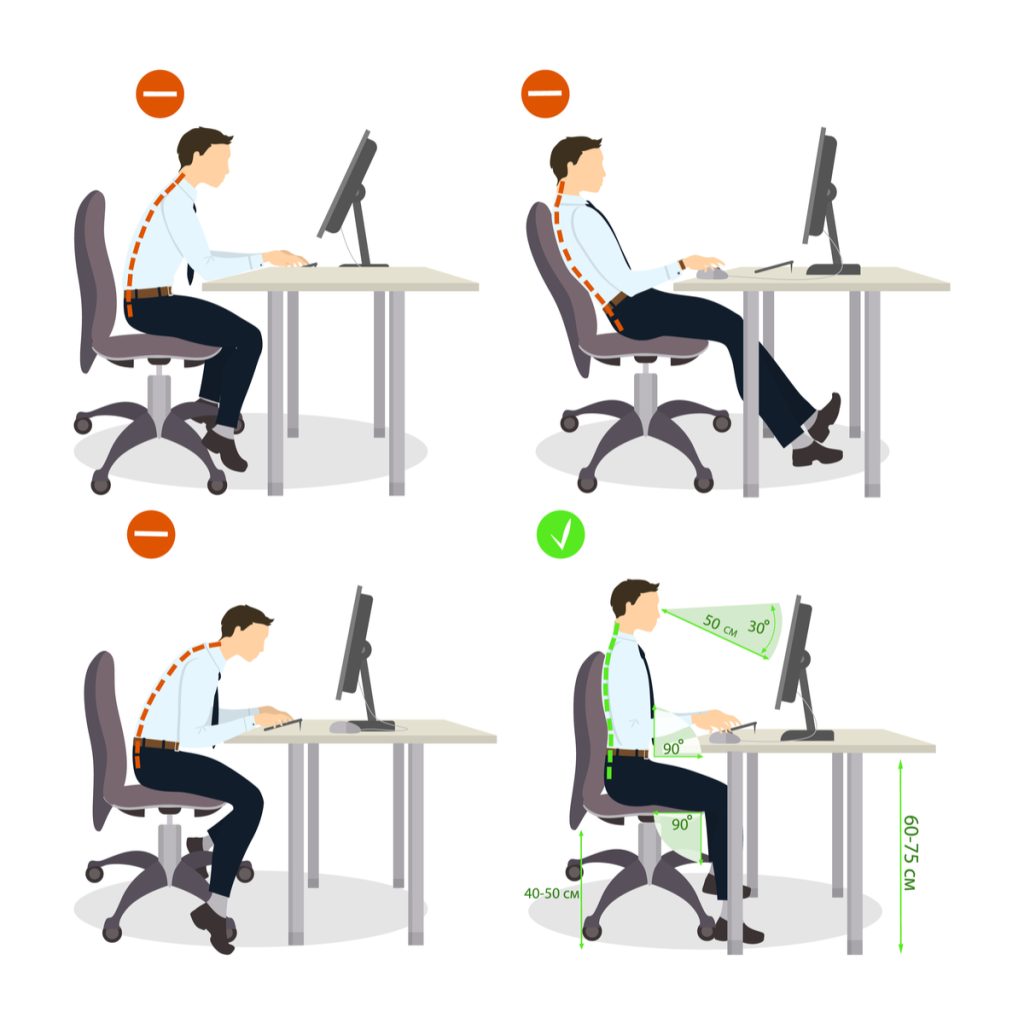
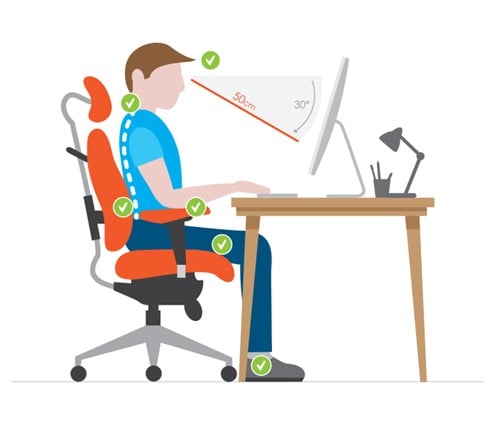
Start with the chair. Choose a chair that supports your lower back. Sit back so your back meets the backrest.
Align your feet. Place feet flat on the floor. Keep knees about level with hips or slightly lower.
Position your hips and pelvis. Tilt the pelvis forward slightly to keep a natural lumbar curve. Avoid slumping or tucking the pelvis under.
Support your lower back. Use built-in lumbar support or a small cushion. This helps maintain the curve without extra effort.
Relax shoulders and arms. Let shoulders drop away from your ears. Keep elbows near your sides and bent about 90 degrees when typing.
Keep the screen and head aligned. Place your screen at eye level to avoid forward head posture. When you learn how to sit properly on a chair this becomes a habit and reduces neck pain.
Shift and move. Change position every 20–30 minutes. Small shifts reduce pressure on soft tissues and keep blood flowing.

Common mistakes and why they happen
Slouching is common. It feels restful but strains the lumbar spine over time. Crossing legs can tilt the pelvis and strain hips. Sitting too far forward makes you hold your torso up and tires your back muscles. Long, static sitting reduces circulation and causes stiffness. Knowing these pitfalls helps you correct them faster.

Benefits of learning how to sit properly on a chair
Less back and neck pain. Better breathing and digestion. Improved alertness and comfort during long tasks. Reduced risk of repetitive strain injuries. When you adopt how to sit properly on a chair, you often work better and feel better.
Limitations and realistic expectations
Good sitting reduces risk but does not erase all pain. If you have a serious spinal condition, see a clinician. Sitting changes must pair with movement, exercise, and sleep quality. Expect gradual gains rather than an instant fix.

Choosing the right chair and setup
Look for adjustable height and lumbar support. A seat depth that lets you sit back with 1–2 inches between the seat edge and the back of your knees helps. Adjustable armrests that allow relaxed shoulders are a plus. If you can, test a chair for 15–30 minutes before buying. Ergonomics matter, but good habits matter more: learning how to sit properly on a chair is the most important step.

Workplace tips and quick fixes
Use a small cushion if your chair lacks lumbar support. Raise your screen with a stand or books to meet eye level. Keep a footrest if your feet do not reach the floor. Set a timer to stand or walk every 20–30 minutes. These small moves make learning how to sit properly on a chair easier and sustainable.

Simple exercises to support better sitting
Pelvic tilts strengthen the core and teach neutral spine. Cat-cow stretches release tight backs. Hip flexor stretches open tight hips from prolonged sitting. Do short breaks with gentle moves every hour. These help your body hold the posture you learn when you practice how to sit properly on a chair.
Personal experience and lessons learned
I have worked with office teams and taught posture classes. Early on, I thought a special chair alone would solve pain. It did not. The big change came when people learned how to sit properly on a chair and to move often. My best tip is to pair a good chair with a timer and one stretch after each hour. Small, steady changes beat big one-time buys.
People also ask — quick answers
- How long should I sit before taking a break?
Aim to stand or move for a few minutes every 20–30 minutes to avoid stiffness. - Can chair cushions fix bad posture?
They help, but practice and regular movement are needed to truly fix posture. - Is standing always better than sitting?
No. Alternating between sitting and standing works best for most people.
Frequently Asked Questions of how to sit properly on a chair
What is the best sitting posture for the lower back?
Sit with your lower back supported and a small lumbar curve. Keep hips slightly higher than knees and avoid slumping.
How can I sit properly on a chair without an adjustable desk?
Adjust your chair height and use a footrest or pillow to keep feet flat. Raise your screen so your eyes sit level with the top third.
How often should I change my sitting position?
Change position every 20–30 minutes and take a 2–5 minute walk or stretch each hour. Small breaks reduce pressure and fatigue.
Will sitting properly on a chair reduce my neck pain?
Yes, aligning your screen and keeping your head over your shoulders reduces neck strain. Combine posture with stretches for best results.
What chair features matter most for posture?
Adjustable seat height, lumbar support, and seat depth are key features. Armrests that allow relaxed shoulders are helpful too.
Can kids learn how to sit properly on a chair at school?
Yes. Teach simple rules: feet flat, back supported, screen or workbook at eye level. Short breaks and movement help kids focus.
Conclusion
Sitting well is a skill you can learn. Start with feet flat, lumbar support, relaxed shoulders, and small movement breaks. Practice these steps daily and you will feel less pain and work more comfortably. Try one change this week and watch the difference — leave a comment, subscribe, or share what worked for you.